
Why ADHD Brains Struggle with Prioritization
ADHD brains prioritize novelty and urgency over long-term importance; low dopamine, time blindness, and weak working memory are key.

ADHD brains prioritize novelty and urgency over long-term importance; low dopamine, time blindness, and weak working memory are key.

Routines that match ADHD wiring—map energy, timebox tasks, reduce distractions, and use anchors, breaks, and rewards to sustain focus.

How ADHD disrupts impulse control — prefrontal delays, low dopamine/norepinephrine, and practical medication plus behavioral strategies.

Use habit stacking plus environmental cues to build ADHD-friendly routines that work with your brain.

Targeted ADHD burnout recovery: prioritize sleep, simplify tasks, use Pomodoro, set boundaries, and build dopamine-supporting routines.

Pick goals that excite you, break them into micro-tasks, track progress visually, and use short rewards to stay motivated.

Early physical, emotional, cognitive and workplace signs of ADHD burnout and practical steps to act before executive function collapses.

Wearables that track HRV, sleep, EEG and use haptic cues to improve focus, time management, and energy for adults with ADHD.

Practical strategies and tools to boost processing speed for ADHD professionals: task breakdowns, routines, digital exercises, and accommodations.

Discover how adult ADHD is diagnosed, the limitations of current tests, and the future of diagnostic tools for ADHD in adults.

Struggling to stay on track? Use our free ADHD Productivity Planner to organize tasks by priority and time, creating a clear daily schedule!
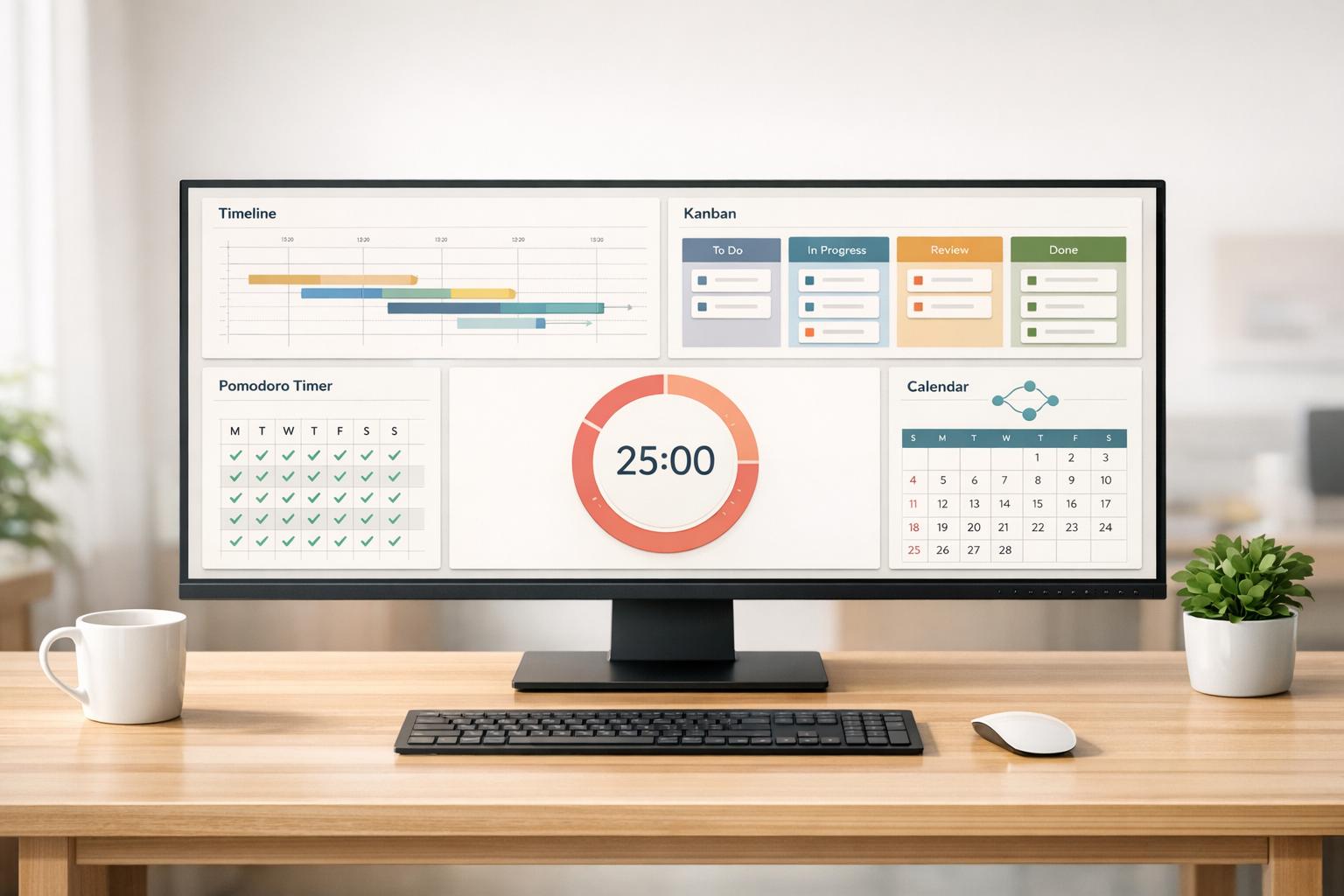
Compare five visual planning apps tailored for ADHD professionals, focusing on timelines, Kanban boards, Pomodoro timers, habit tracking, and calendar sync.